
Introduction
As global stakeholders demand greater accountability, transparency, and sustainability, Environmental, Social, and Governance (ESG) practices have evolved from being a regulatory requirement to a core strategic priority.
However, managing ESG data, reporting frameworks, and compliance obligations internally can be complex, time-consuming, and costly.
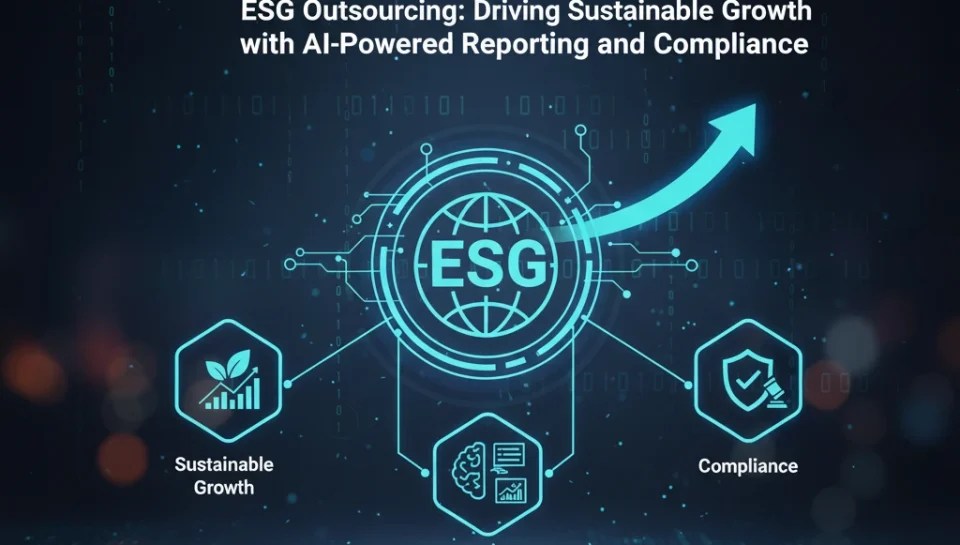
That’s where ESG outsourcing comes in — enabling organizations to partner with specialists who combine sustainability expertise, regulatory alignment, and AI-driven analytics to streamline ESG reporting, automate compliance, and deliver actionable insights for long-term value creation.
1. The Rise of ESG Outsourcing in Modern Enterprises
With investors, regulators, and customers demanding verifiable sustainability data, ESG has become a critical metric of corporate performance.
Yet, most companies struggle with fragmented data systems, manual reporting, and unclear accountability.
By outsourcing ESG functions, businesses gain access to a centralized, technology-driven ESG management model — ensuring accurate reporting, proactive compliance, and consistent alignment with frameworks like GRI, SASB, and BRSR.
Key Benefits of ESG Outsourcing:
- Reduced operational burden on internal teams.
- Real-time ESG data analysis powered by AI and automation.
- Consistent reporting aligned with global and local frameworks.
- Stronger stakeholder trust through verified, transparent disclosures.
Keywords: ESG outsourcing, sustainability compliance, corporate sustainability management.
2. Automating Sustainability Reporting: From Manual to Intelligent
ESG reporting is often hindered by manual data collection, inconsistent metrics, and siloed systems.
Sustainability reporting automation transforms this landscape by integrating AI, RPA, and analytics tools to manage ESG disclosures more efficiently.
AI-Driven ESG Reporting Capabilities:
- Automated Data Collection: AI extracts and consolidates ESG data from multiple sources — energy usage, HR records, supply chain systems, and CSR initiatives.
- Framework Mapping: Automated alignment of data to global standards such as GRI (Global Reporting Initiative), SASB (Sustainability Accounting Standards Board), and BRSR (Business Responsibility and Sustainability Reporting).
- Anomaly Detection: AI flags missing or inconsistent ESG metrics for correction.
- Predictive ESG Analytics: Machine learning forecasts environmental or social impact based on historical data.
- Narrative Reporting: Generative AI tools draft sustainability reports, summaries, and board presentations.
Benefits:
- Up to 70% faster ESG report generation.
- Higher data accuracy and standardization.
- Improved audit readiness through automated documentation.
Keywords: sustainability reporting automation, ESG data management, AI in ESG analytics.
3. CSR Compliance Management: Aligning Purpose with Performance
Corporate Social Responsibility (CSR) has become an integral part of ESG commitments, particularly in markets like India, where CSR spending and disclosure are mandatory under regulatory frameworks.
Outsourced CSR compliance management ensures that organizations not only meet statutory obligations but also track impact, monitor spending, and align CSR projects with ESG goals.
Key Areas of CSR Outsourcing:
- Policy Drafting and Implementation: Developing CSR strategy aligned with ESG objectives.
- Spending Monitoring: Real-time tracking of CSR fund utilization and program outcomes.
- Audit and Reporting: Automated validation of CSR compliance data for disclosure.
- Impact Assessment: AI analytics measure the social and environmental impact of CSR initiatives.
- Regulatory Alignment: Compliance with CSR rules under the Companies Act and integration into annual ESG disclosures.
Benefits:
- Transparent and accountable CSR governance.
- Streamlined audit trail for regulators and stakeholders.
- Integration of CSR initiatives into sustainability reports.
Keywords: CSR compliance management, CSR outsourcing, ESG integration, social impact analytics.
4. ESG Regulatory Alignment and Governance
Compliance with evolving ESG regulations requires continuous monitoring and alignment with multiple global and regional frameworks.
Outsourced ESG partners help organizations navigate this complexity through structured reporting, regulatory tracking, and automated risk management.
ESG Frameworks and Regulatory Focus:
- GRI (Global Reporting Initiative): Focuses on sustainability impact — environmental footprint, labor practices, anti-corruption measures.
- SASB (Sustainability Accounting Standards Board): Industry-specific financial materiality standards linking sustainability and performance.
- BRSR (Business Responsibility and Sustainability Reporting): India’s SEBI-mandated framework emphasizing corporate responsibility, governance, and stakeholder inclusivity.
AI in ESG Compliance:
- Regulatory Scanning: AI monitors changing ESG laws across jurisdictions.
- Gap Analysis: Detects non-compliance and recommends corrective actions.
- Policy Automation: Updates internal documentation and templates with the latest legal clauses.
- Audit Trail Creation: Auto-generates evidence logs for ESG and CSR audits.
Benefits:
- Continuous compliance across global and regional ESG frameworks.
- Improved governance and transparency.
- Faster regulatory response through real-time data and alerts.
Keywords: ESG outsourcing, regulatory compliance automation, AI in ESG analytics, sustainability governance outsourcing.
5. AI in ESG Analytics: Turning Data into Decisions
Artificial Intelligence is redefining how organizations collect, analyze, and act on ESG information.
By integrating AI in ESG analytics, businesses can uncover hidden insights, predict sustainability risks, and make data-backed strategic decisions.
AI Applications in ESG Analytics:
- Predictive Risk Modeling: Forecast carbon emissions, waste generation, or labor risk hotspots.
- Sentiment & Reputation Analysis: NLP tools evaluate stakeholder and media sentiment toward sustainability efforts.
- Carbon Footprint Tracking: Automated measurement of GHG emissions across operations and supply chains.
- ESG Scoring Systems: AI generates real-time ESG performance scores to benchmark progress.
- Anomaly & Fraud Detection: Identifies inconsistencies in reporting or greenwashing patterns.
Benefits:
- Enhanced decision-making through data transparency.
- Proactive sustainability strategy and risk prevention.
- Credible ESG scoring for investors and regulators.
Keywords: AI in ESG analytics, ESG data automation, predictive ESG modeling, sustainability intelligence.
6. The Strategic Value of ESG Outsourcing
ESG outsourcing is no longer a back-office compliance function — it’s a strategic enabler of sustainable transformation.
By leveraging AI, automation, and expert governance, organizations achieve measurable ESG outcomes while aligning with long-term business goals.
| ESG Function | AI-Driven Transformation |
|---|---|
| ESG Data Management | Automated data capture and standardization |
| Reporting (GRI/SASB/BRSR) | Intelligent mapping and disclosure automation |
| CSR Compliance | Real-time tracking and audit readiness |
| Regulatory Monitoring | AI-based change detection and alerts |
| ESG Analytics | Predictive sustainability modeling |
Outcome: Smarter reporting, stronger compliance, and sustainable value creation.
Conclusion
As ESG expectations intensify worldwide, organizations must move beyond manual processes to intelligent ESG outsourcing models that deliver compliance, credibility, and competitive advantage.
Through sustainability reporting automation, CSR compliance management, and AI in ESG analytics, businesses can ensure transparency, reduce risk, and build investor confidence—while contributing meaningfully to people, planet, and profit.
In the age of responsible business, AI-powered ESG outsourcing isn’t just about reporting—it’s about reimagining sustainability for the future.

